

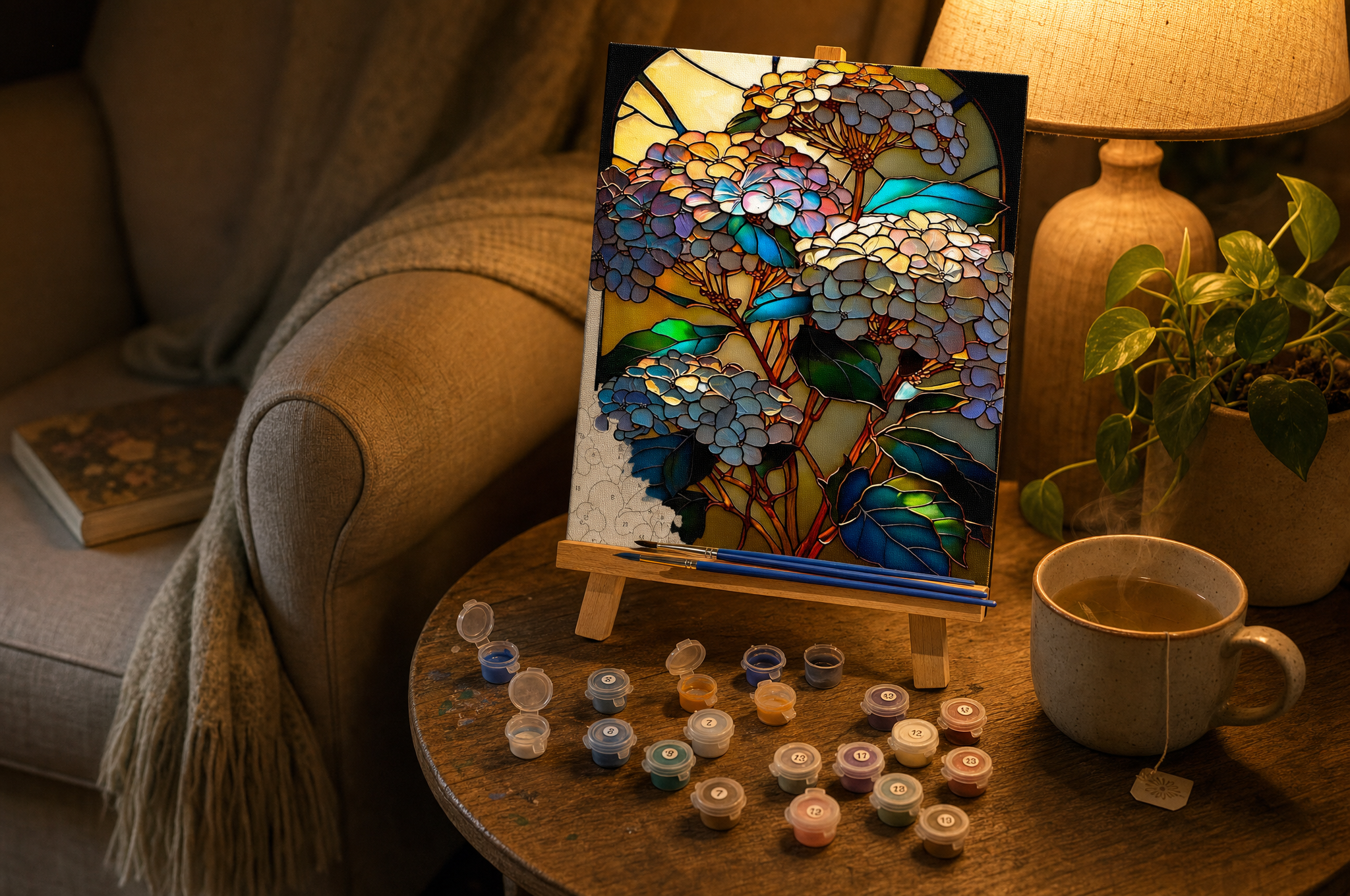
In one line: painting by numbers gives your brain a rare combination — a single point of focus, gentle repetition, visible progress and zero screens — which is why so many people reach for it as their wind-down ritual.
We sell painting kits, so take our enthusiasm with the appropriate grain of salt — but there are honest, common-sense reasons this hobby has become a fixture of so many people's evenings, and they're worth spelling out.
A single point of focus
Most of modern life is fifteen tabs open at once. A numbered canvas asks exactly one thing of you: find the sections marked 7, fill them with color 7. That narrowness is the appeal. Attention that usually ricochets between notifications settles onto a brush tip, and many painters describe losing an hour without noticing — the state psychologists popularly call "flow." It's the same quality that made adult coloring books a phenomenon; painting simply adds richer color, texture and a finished artwork at the end.
Progress you can literally see
A lot of good habits — meditation, journaling — pay off invisibly. Painting pays you every session: the canvas is measurably more complete than when you sat down. That steady, low-stakes sense of accomplishment is a quiet mood-lifter, and it compounds over the days or weeks a canvas takes. When it's done, you don't get a streak counter — you get something to hang on the wall.
Structure without pressure
Blank-page creativity is intimidating; that's the honest reason many adults quit art at twelve. Paint by numbers removes the two scariest parts — what do I paint? and what if it looks bad? — because the composition is settled and the numbers guarantee a coherent result. You get the sensory pleasure of painting (color, brushwork, the smell of acrylics) without performance anxiety. Our tips guide makes the on-ramp even gentler.
Screen-free by default
You cannot paint sections and scroll at the same time — the hobby physically occupies your hands. For an hour, the phone sits face-down and your eyes rest on something that isn't backlit. Plenty of customers tell us that's the entire reason they ordered: they wanted an evening habit that isn't a screen.
It works alone or together
Solo, it's meditative. Side by side, it's one of the easiest shared activities there is — no rules to learn, no winner, conversation optional. Couples split a canvas; parents paint alongside kids (designs like Blossoming Hues are suitable from age 8); adult children paint with parents. A shared project with a custom canvas of a family photo doubles as time together and a keepsake.
Where to start if relaxation is the goal
- Choose flowing, organic designs. Florals and landscapes — like our flower art collection — have generous sections and forgiving edges.
- Golden-pattern designs reward slow work. The Klimt-inspired collection is dotted, ornamental and deeply absorbing.
- Keep sessions short and regular. Thirty focused minutes most evenings beats a marathon; the kit's acrylic pots seal shut between sessions.
- Make it a ritual. Same chair, same lamp, maybe tea. The canvas becomes the cue to switch off.
One honest caveat: a hobby is a hobby. Painting can be a genuinely restorative part of looking after yourself, but it isn't a treatment for anxiety, depression or any other health condition — if you're struggling, please talk to a professional. The canvas will still be there afterward.
If this sounds like the evening habit you've been missing, start with something from the Best Sellers collection — every kit includes the numbered canvas, matched paints, three brushes and instructions for under $30.